Why Focus Mode Matters More Than You Think
The most common cause of technically failed shots isn't exposure or composition — it's focus. Missed focus on the eyes in a portrait. A sharp background and a blurry bird. A crisp stadium instead of a crisp athlete. These failures aren't random. They're almost always the result of using the wrong focus mode for the subject.
Modern autofocus systems are extraordinarily capable. The constraint is usually the photographer not giving the camera the right instructions.
AF-S (Single-Servo / One-Shot AF)
AF-S acquires focus when you half-press the shutter, locks it, and holds it until you either take the shot or release. The camera will not refocus until you lift and re-press.
This is the correct mode for any stationary subject: portraits of still subjects, landscapes, architecture, product photography, food. The camera locks focus precisely and reliably. Because it's not continuously hunting, battery consumption is lower and the system is less prone to the brief focus hunting that AF-C can exhibit in low contrast scenes.
The critical limitation: if your subject moves after you've locked focus, the image will be blurry. AF-S on a moving subject is a gamble.
AF-C (Continuous-Servo / AI Servo AF)
AF-C continuously recalculates focus for as long as you hold the shutter half-pressed. It predicts where a moving subject will be at the moment of exposure — using the camera's understanding of velocity and trajectory — and pre-focuses to that point.
This is the correct mode for anything that moves: sports, wildlife, children, street photography, birds in flight, cars. The camera constantly updates its focus calculation. If the subject changes direction or speed, modern systems adapt within a few frames.
AF-C uses more battery and generates more AF noise (the lens hunting). On lower-end cameras, the continuous calculation is visibly noisier. On modern mirrorless systems with phase-detect pixels across the sensor, it's nearly silent and exceptionally reliable.
AF-A (Automatic) — Avoid It
AF-A is meant to detect whether a subject is moving and switch between AF-S and AF-C automatically. In practice it's indecisive and unreliable. You generally know whether your subject is moving. Pick the appropriate mode yourself rather than delegating the decision to the camera.
Focus Area Modes
Separate from focus servo modes, focus area modes determine where in the frame the camera looks for focus.
Single point: You choose exactly which point the camera uses. Precise and reliable. The correct choice when you know exactly what you want in focus and it doesn't move unpredictably.
Zone / Dynamic area: You select a zone of several points. If the subject moves slightly out of the initial point, the surrounding points take over. Useful for subjects that move within a limited area.
Wide / Auto area: The camera uses all available focus points and decides what to focus on. It typically prioritises the nearest subject or the largest face detected. Useful for fast, unpredictable action where you can't keep a specific point on the subject.
Tracking: You identify the subject by placing the focus point on it; the camera then tracks that subject as it moves around the frame. This is the most powerful option for moving subjects and is now standard on modern mirrorless cameras.
Eye AF — The Game Changer
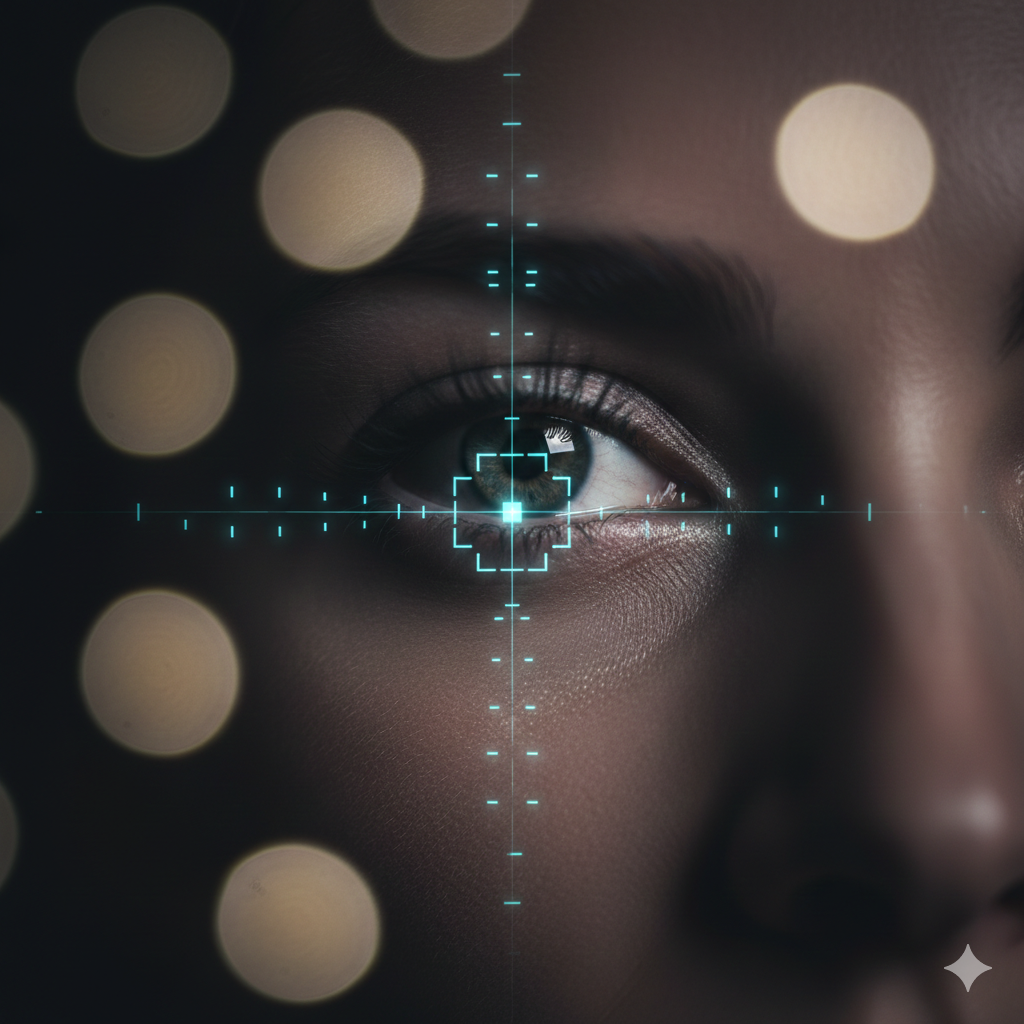
Eye AF is now available on virtually all modern mirrorless cameras and has fundamentally changed portrait and wildlife photography. The camera's subject recognition system identifies eyes in the frame — human, animal, or bird depending on the camera — and locks focus precisely on the nearest eye, tracking it even as the subject moves.
For portrait photography this is transformative. The eyes are always the critical focus point in a portrait. With Eye AF active, you can focus on composition rather than precision — the camera handles the focus. For wildlife and bird photography, it removes what was previously the most technically demanding aspect of the genre.
Eye AF works best in AF-C with the widest area mode. Let the camera track. Trust the system — on modern bodies it's more reliable than manual point selection in most conditions.
Back-Button Focus
By default, the shutter button both focuses and fires. Back-button focus reassigns focus activation to a button on the back of the camera (typically AF-ON), separating focus from shutter activation.
The advantage: you can lock focus without the risk of accidentally firing, and switching between one-shot behaviour (press and release the back button) and continuous tracking (hold the back button) without changing any menu settings. Many professional photographers consider back-button focus essential once they've tried it.
The learning curve is real — it takes a few days of deliberate practice to make it feel natural. Set it up on a quiet day rather than at an event where you need reliable results immediately.
Practical Setup by Shooting Type
Portraits (still): AF-S, single point or Eye AF. Lock, compose, shoot.
Portraits (moving subject): AF-C, Eye AF, wide area. Let the camera track.
Sports/wildlife: AF-C, tracking or wide zone, high-speed burst.
Landscape/architecture: AF-S, single point. Often focus once, then switch to MF to lock.
Street: AF-C with zone, or zone focus (pre-focus at a set distance) for zone focusers.