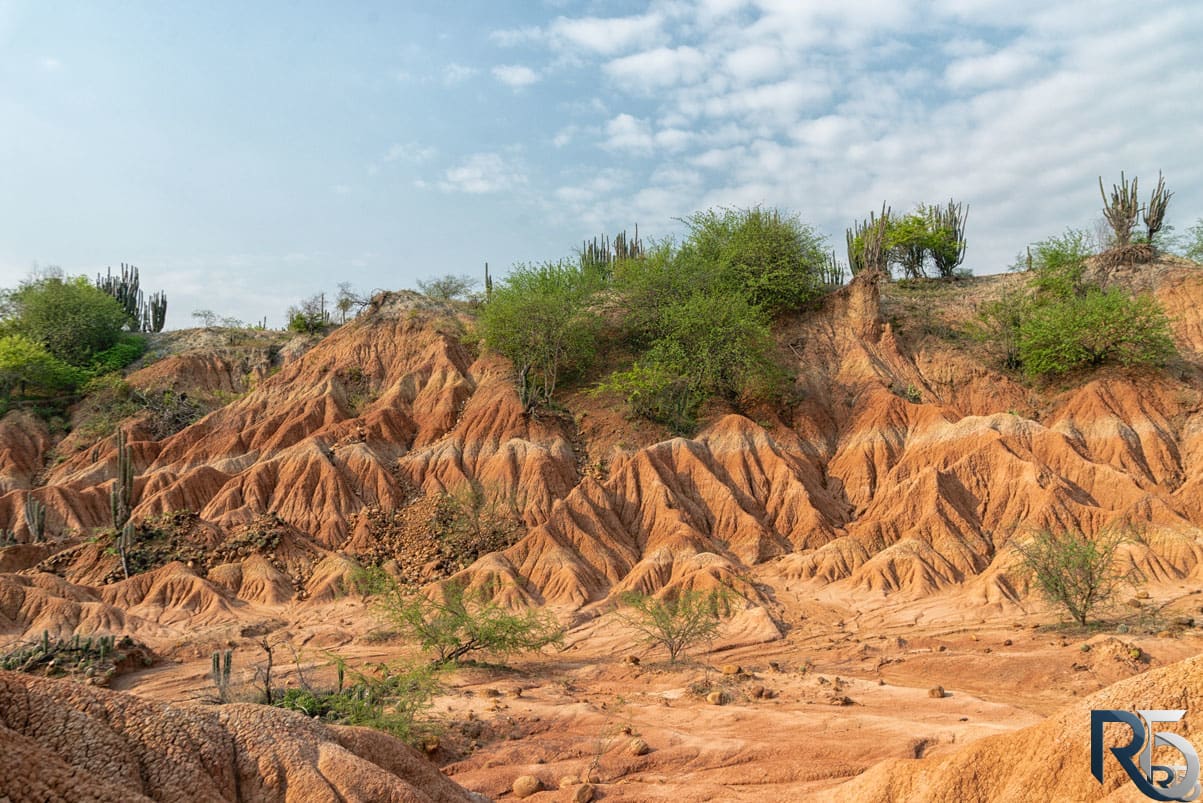
I didn't plan to do Colombia first. I was already here when I started the DNV process. That matters, in my specific situation, I couldn't apply from outside the country. If you're deciding where to start your nomad life, Colombia is a genuinely excellent choice: timezone overlap with US clients, low cost of living, fast internet in the main cities, and a warmth of culture that's hard to find elsewhere.
Colombia gets a bad reputation from people who last checked a map in 2005. The reality in 2024 is a country that's genuinely modernising fast, especially in Bogotá and Medellín, with a growing tech scene, real infrastructure, and a cost of living that makes your remote income feel like a superpower.
⚠️ One thing to know upfront
Colombia's DNV is officially the Visa M, Nómada Digital. Start collecting documents at least 3 months before you plan to apply. Some documents have expiry dates and you don't want to be re-requesting a criminal record apostille because you were too early. I learned this the hard way.
Requirements
💰
Income-3× Minimum Wage
Around $700-800 USD/month as of 2024. Verified with bank statements and/or payslips from the 3-6 months before application. Easier threshold than most European DNVs.
💼
Remote Work Proof
Employment contract or freelance agreements showing work for a non-Colombian entity. Invoices, contracts, or an employer letter. The work must be remote, you're not allowed to work for Colombian companies on this visa.
❤️
Health Insurance
International health insurance valid in Colombia for the full duration of your stay. Emergency and hospitalisation coverage required. Must be clearly documented, they check.
🚔
Criminal Record
From your home country, or every country you've lived in over the past 5 years. Must be recent (within 3-6 months of application) and apostilled. This is usually the slowest document. Start here.
📄
Valid Passport
Valid for at least 6 months beyond your stay. Clean copy of the bio page plus all Colombia entry/exit stamps. Keep your passport organised, they look at the whole thing.
📸
Photos + Online Application
Passport-style photos. Application submitted through Colombia's Cancillería portal, in Spanish. Application fee paid online before submission. Use Chrome translate if your Spanish isn't there yet.
Application Routes
In-Country Application Only (In My Case)
In my specific situation, I couldn't apply for the Colombian DNV from another country. I was already in Colombia when I started the process and applied from inside the country. The application itself is done online through the Cancillería portal, but certain aspects of the process (and definitely the Cédula step afterward) require you to be physically present.
Some applicants do apply from abroad, check whether your specific circumstances allow a consulate application. If you're already in Colombia, the in-country route is straightforward.
Online Portal
Colombia Cancillería, cancilleria.gov.co
The entire application is submitted online. In Spanish, use Chrome's translation or have a Spanish speaker help. Upload documents as PDFs, pay the fee online (~$52 USD), submit. Keep the confirmation number. Processing takes approximately 30 days before you receive a response.
💡 If they ask for more information, don't panic
A request for additional documents is not a rejection. Respond clearly, document your answer with official paperwork, and they process it quickly. My DBA name issue was resolved in under 10 business days after I sent a one-page explanation letter with supporting documents.
Tax, Colombia Rules
No Special Tax Regime, But Residency Rules Matter
Colombia doesn't have a territorial tax system like Panama or Paraguay. However, you only become a Colombian tax resident if you spend 183 or more days in Colombia in a 365-day period. If you're using Colombia as a travel base and spending significant time elsewhere, you may not trigger Colombian tax residency.
If you do become a Colombian tax resident, foreign-source income is taxable in Colombia at progressive rates (0-39%). This is not the same situation as Panama or Paraguay, Colombia does tax worldwide income for tax residents. Track your days carefully.
For most nomads who are genuinely mobile, spending time in multiple countries, Colombian tax residency is avoidable. Get advice from a Colombian accountant (contador) if you're planning to stay long-term.
Cities
I've traveled 20+ cities across Colombia, every one is different in altitude, climate, culture, and pace. Below is the short version. For the full breakdown with neighbourhood analysis, see the city guide.
🇯🇴 Bogotá
My base · Main hub
Best transport connectivity, strongest coworking infrastructure. 2,600m altitude needs adjustment but everything is accessible from here.
🇲🇪 Medellín
Eternal spring · Nomad epicentre
22-25°C year-round, cheapest major city, huge nomad scene. El Poblado is the expat bubble; Laureles is more local.
🇨🇴 Cartagena
Caribbean · International flights
Visually stunning. Sea-level airport means better long-haul international connections than Bogotá. Hot and humid year-round.
🇨🇴 Santa Marta
Gateway city · Nature access
Base for Tayrona, Palomino, Minca. More local than Cartagena, cheaper. Limited nomad infrastructure but great for shorter stays.
🇨🇴 Cali
Salsa capital · Most affordable
Cheapest major city. World's best salsa dancing. More Colombian, less expat-bubble. Security requires more awareness than Bogotá.
Full City + Neighbourhood Guide →
Approximate Costs
These are rough estimates based on my 2024 experience. Costs vary by country of origin and provider.
| Item | Approx (USD) | Notes |
|---|
| Visa application fee | ~$52 | Paid online to Cancillería |
| Document translations (if needed) | $50-150 | Only if your documents aren't in Spanish |
| Apostille (criminal record) | $20-80 | Varies significantly by country |
| Health insurance (annual) | $500-1,200 | International coverage, Colombia-valid |
| Cédula processing fee | ~$16 | Migración Colombia government fee |
| Total first-year setup | $638-1,498 | Excluding any legal help |
💡 Colombia is cheap compared to most DNV options
The income threshold is low (~$700/month), the application fee is modest, and the cost of living means your remote income goes much further than in Europe. If you're choosing your first DNV country, Colombia is one of the easier entry points financially.
My Plan, Real Timeline & Living
My Real Timeline
📋
Months 1-3
Document Collection, Started Too Early, Still Took 3 Months
I started collecting documents well ahead of when I thought I'd apply. Even then, it took about 3 months to have everything in order. The criminal record apostille was the bottleneck. Bank statements need to be recent, so there's a window, you can't have everything ready 6 months before you apply. Plan for the last 4-6 weeks to be the crunch period where everything comes together simultaneously.
✈️
Prerequisite
I Had to Be in Colombia to Apply
In my situation, applying from another country wasn't possible. I came to Colombia first and applied from inside the country. The DNV application itself is online, but the Cédula step afterward definitely requires you to be present. Some people do apply from abroad, check whether your specific circumstances allow it.
📤
Application
Online via Colombia's Cancillería Portal
The application is submitted through the official Cancillería website. It's in Spanish. If you don't speak Spanish, browser translation works fine for navigation. Upload all documents as PDFs, pay the application fee online, and submit. Keep a copy of the confirmation number, you'll need it to track progress.
⏳
~1 month waiting
First Response, They Needed More Information
About a month after submitting, I got a response, not an approval, but a request for additional information. The issue: the name of my employer in my employment documents and the company name on my bank statements didn't match exactly. My employer operates as "Company A doing business as XYZ", a DBA (doing business as) arrangement. The immigration office flagged this discrepancy and asked for clarification.
📝
My response
Sent an Explanation Letter
I wrote a formal letter explaining the DBA relationship, what the legal entity name is, what the trading name is, and why they appear differently on different documents. I included supporting documentation: the company's business registration showing both names, official company letterhead, and a statement from my employer confirming the connection. Kept it factual and clear. One page.
✅
Under 10 business days
Approved
Fewer than 10 business days after sending the clarification. Once they had the explanation they moved quickly. The lesson: if you get a request for additional information, don't panic. Read it carefully, respond clearly, document everything, and they process it fast. A well-written one-page letter did the job.
🪪
2-3 weeks after approval
Cédula de Extranjería
After approval you need to register and get your Cédula, Colombia's foreigner ID card. Book an appointment through Migración Colombia's online system. The appointment itself is straightforward and fast. The physical card took 2-3 weeks to arrive. In the meantime, carry your visa approval letter everywhere, it functions as your ID while you wait.
✓ Total time from application to Cédula: roughly 5-7 months
3 months document collection + 1 month waiting + 2 weeks for clarification response + 2-3 weeks for Cédula. If your documents are clean and your employment situation is straightforward, you could do it faster. My DBA issue added a few weeks.
💡 If you have a DBA situation, address it proactively
If your payslips, bank statements, and contracts don't all show exactly the same company name, include a brief DBA explanation letter with your original application. Don't wait for them to ask. One paragraph with official letterhead from your employer is enough. This is more common than people think.
Living in Colombia
~$800-1,400
Monthly budget (Bogotá)
~$600-1,100
Monthly budget (Medellín)
No DST
Colombia never changes clocks
COP
Currency (Colombian Peso)
🌐 Internet
In Bogotá and Medellín, fibre internet is fast and reliable-200-600 Mbps typical in apartments. Most coworking spaces and good cafés have solid connections. In smaller cities and tourist towns, it degrades. Always test before committing to a workspace.
🏠 Housing
Furnished apartments on Airbnb or local platforms (Fincaraíz, Finca Urbana). Bogotá: $600-1,200/month for a comfortable 1BR in good neighbourhoods like Chapinero, Usaquén, or Quinta Camacho. Medellín runs 20-30% cheaper for comparable quality.
🏦 Banking
With a Cédula you can open a local bank account. Bancolombia and Nequi are the most common. Nequi is the mobile bank, easy to set up, widely used for local payments. Wise and Revolut work well for international transfers before you have local banking.
📱 SIM Card
Claro and Tigo are the main carriers. Coverage is excellent in cities, patchy in rural areas. Buy a prepaid SIM at any supermarket or carrier store for under $5. Data is cheap, $15/month gets you plenty. eSIM options are improving but physical SIMs are still more reliable.
🚕 Transport
Bogotá has TransMilenio (BRT) and Transporte Zonal. For getting around the city, InDriver and Uber (technically Cabify here) are cheap and reliable. Rappi covers food delivery and almost everything else. Avoid driving unless you know Colombian traffic well.
⏰ Time Zone
UTC-5, and Colombia never observes daylight saving time. This is actually a quiet advantage, your schedule is completely predictable year-round. Overlaps well with US East Coast (1 hour behind EST in winter, same in summer) and works for Europe in morning meetings.
Getting Around Colombia
Colombia is bigger than it looks on a map. Internal flights are the sensible option for anything more than 3-4 hours away. Avianca and VivaAir (now merged into Avianca) plus LATAM cover the main routes. Book early, domestic prices spike closer to travel dates.
✈️ The Bogotá altitude thing, this actually matters
Bogotá sits at 2,600 metres above sea level. At that altitude, aircraft engines produce less thrust and need more runway to take off, which means they carry less fuel load. The practical consequence: very few long-haul direct international flights operate from Bogotá. Most transatlantic routes and many long-haul connections require a stop in Medellín, Panamá City, or Miami. For international travel, especially to Europe, Cartagena is a significantly better and often cheaper departure point. Cartagena is at sea level. Planes leave with full tanks. Direct connections exist that simply don't operate from Bogotá. I learned this early and now route most international trips through Cartagena.
For domestic travel, Bogotá is unbeatable as a hub, El Dorado Airport connects to almost every city in the country, multiple times a day. From Bogotá you can be in Medellín in 45 minutes, Cartagena in 1.5 hours, Cali in 45 minutes.
Overland is an option for shorter distances, Bogotá to Villa de Leyva is 3 hours by bus and genuinely scenic. For longer trips, the roads vary wildly in quality and the journey times are long. Internal flying is usually the right call for anything over 5 hours by road.
Cities I've Been To
I've been to 20+ cities across Colombia. Every one is different, altitude, climate, culture, vibe.
Bogotá 🏙️
Cartagena 🌊
Medellín 🌸
Cali 💃
Santa Marta 🏖️
Salento ☕
Barranquilla 🎉
Pereira 🌿
Armenia
Manizales
Bucaramanga
Leticia 🌴
Tatacoa Desert
Villa de Leyva
San Andrés 🐠
Palomino
Taganga
Guatapé
Barichara
Mompox
+ still going →