🛒 Ingredients
- 200gSpaghetti or tonnarelli
- 80gPecorino Romano, finely grated
- 40gParmigiano Reggiano, finely grated
- 2 tspBlack pepper, freshly cracked (generous)
- 1 tspSalt (for pasta water)
🛠️ Method
Crack and Toast the Pepper
Crack whole black peppercorns coarsely, not pre-ground powder, which is too fine and dusty. Toast in a dry pan over medium heat for 60 seconds until fragrant. Remove and set aside. This one step makes a noticeable difference.
Cook the Pasta, Deliberately Underwater
Use less water than usual, about half. This concentrates the starch, which is what makes the sauce emulsify. Salt lightly (Pecorino is very salty). Cook pasta to 2 minutes before al dente, it will finish in the pan.
Make the Cheese Paste
While pasta cooks, combine both grated cheeses in a bowl. Add 3-4 tablespoons of the hot pasta water and whisk vigorously into a smooth, thick paste. The consistency should be like a creamy sauce, not clumped. If needed, add a splash more water. This step done off-heat prevents the cheese from seizing.
Finish in the Pan
Transfer pasta to the pan with toasted pepper (medium-low heat). Add a ladle of pasta water and toss continuously, use tongs and a spoon together, moving the pasta in circles. Remove from heat entirely. Add the cheese paste in two stages, tossing fast. The residual heat melts the cheese; direct heat will scramble it. Add pasta water a splash at a time if it tightens up.
Serve Immediately
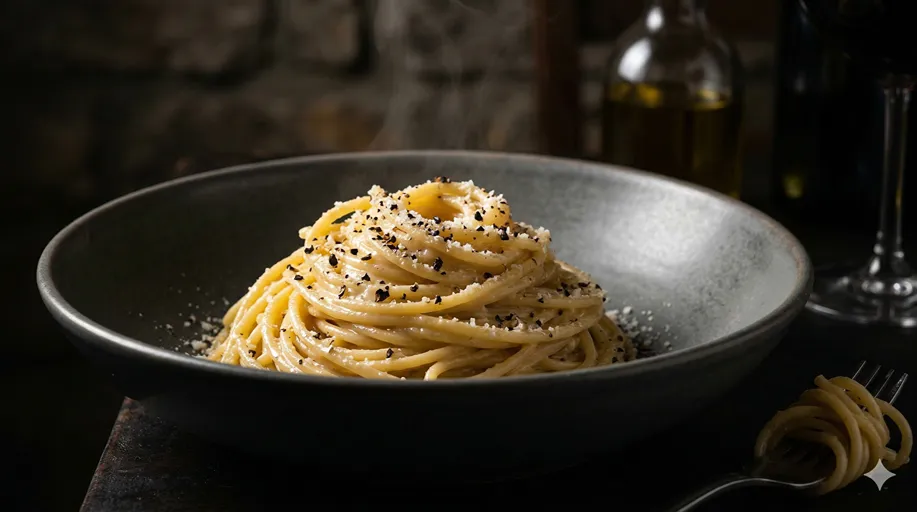
Plate into warm bowls, top with more cracked pepper and a fine snow of Pecorino. Cacio e pepe waits for no one, eat immediately before the sauce tightens.
💡 Chef's Notes
Cheese matters enormously. Pre-grated cheese has anti-caking agents that prevent proper emulsification. Grate your own, very finely, almost powdery. A microplane is ideal.
Pasta shape: Tonnarelli (square spaghetti) is traditional. Spaghetti works. Rigatoni works for a more casual version. Avoid anything too thin.
Scaling up: This recipe is harder with larger quantities. The heat management becomes trickier. Master 2 portions before attempting 4.
📜 A Short History
Cacio e pepe is one of the four classic Roman pastas, alongside carbonara, amatriciana, and gricia, and it's widely believed to trace back to shepherds from the surrounding Lazio countryside. Aged pecorino and dried black pepper both kept for long stretches without refrigeration, making them practical travel food for shepherds spending weeks away with their flocks, long before it became a signature dish of Rome's trattorias.
🍽️ Nutrition (per serving)
Estimated from standard ingredient nutrition data for this recipe as written, serves 2. The sodium is genuinely high here, both pecorino and parmigiano are naturally salty aged cheeses, this isn't an error.