🛒 Ingredients
- 250 gDried chickpeas
- 1 tspBaking soda (for soaking)
- 80 gGood-quality tahini
- 2 clovesGarlic
- 3 tbspLemon juice (fresh)
- ½ tspCumin
- 1 tspSalt
- 3 tbspIce water (for blending)
- - To serve
- 2 tbspExtra virgin olive oil
- ½ tspPaprika or sumac
- handfulFlat-leaf parsley
- pinchWhole chickpeas (reserved)
🛠️ Method
The Soak
Cover dried chickpeas with cold water, at least 3x their volume. Add 1 tsp of baking soda. Soak overnight (8-12 hours minimum). The baking soda breaks down the skins and softens the chickpeas significantly, which directly translates to smoother hummus. Drain and rinse well before cooking.
The Cook
Cover drained chickpeas with fresh cold water in a pot. Bring to a boil, skimming any foam. Reduce heat and simmer for 1-1.5 hours until completely tender, they should crush effortlessly between two fingers with zero resistance. Undercooked chickpeas are the most common cause of grainy hummus. Reserve the cooking liquid. Before draining, scoop out a few whole chickpeas and set them aside for garnish.
The Blend, While Hot
This step cannot be delayed. Drain the chickpeas and immediately transfer them to a food processor or high-speed blender while still steaming hot. Process for 2 minutes until they form a rough paste. The heat is what enables the ultra-smooth texture, the starches are still fluid and blend out completely.
Add Tahini and Season
With the blender running, add tahini, garlic, lemon juice, cumin, and salt. Then add the ice water, the cold water creates an emulsification reaction with the hot chickpeas and tahini that makes the hummus lighter and creamier. Blend for another 3-5 minutes. Taste and adjust: more lemon for brightness, more salt for depth, more tahini for richness. The texture should be silky and slightly looser than you expect, it firms up as it cools.
Serve
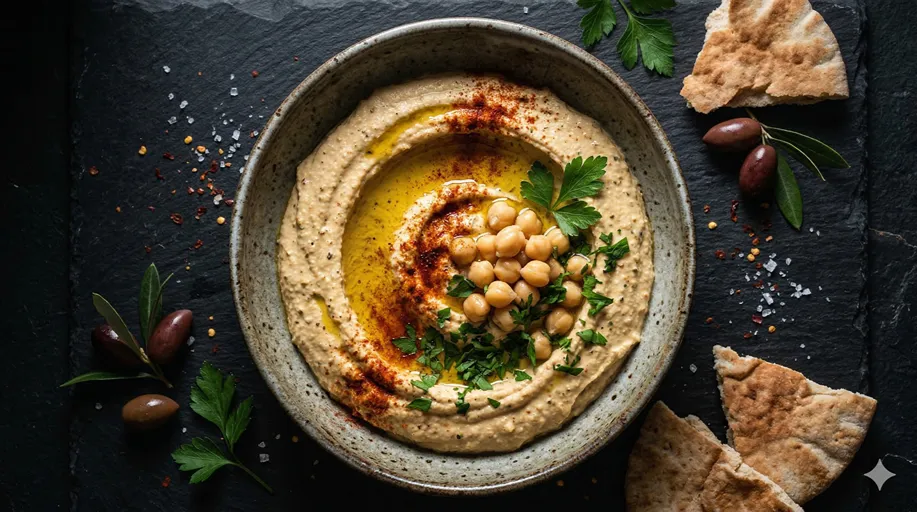
Spread onto a wide plate using the back of a spoon to create a shallow well in the centre. Drizzle generously with olive oil, do not be shy. Add the reserved whole chickpeas, a pinch of paprika or sumac, and torn parsley. Eat with warm pita or flatbread. Room temperature or slightly warm is better than cold from the fridge.
💡 Chef's Notes
Tahini quality matters enormously. Cheap tahini is bitter and separates. Al Nakhil, Soom, or any Lebanese brand from a Middle Eastern grocery is the right choice.
Canned chickpeas shortcut: Drain, then simmer in fresh water with ½ tsp baking soda for 20 minutes until very soft. Not the same, but usable in a pinch.
Stores well: Refrigerates for 5 days. Cover the surface with olive oil to prevent a skin forming. Always bring to room temperature before serving.
Variations: Blend in roasted red pepper, roasted garlic, or a handful of fresh herbs. The base recipe is stable enough to handle additions.
📜 A Short History
Chickpeas have been cultivated and eaten across the Eastern Mediterranean and Middle East for thousands of years, and mashed, seasoned chickpea dishes appear in the region's culinary record for nearly as long. The specific combination of chickpeas, tahini, lemon, and garlic that we'd recognize as hummus today is documented in Arabic cookbooks from at least the 13th century. Its exact origin is genuinely disputed, Lebanon, Israel, Palestine, Egypt, and Syria all claim it as their own, and there's no single settled answer, it emerged from a shared regional food culture rather than one specific place.
🍽️ Nutrition (per serving)
Estimated from standard ingredient nutrition data for this recipe as written, serves 6. Actual values will vary with the specific brands and quantities you use.