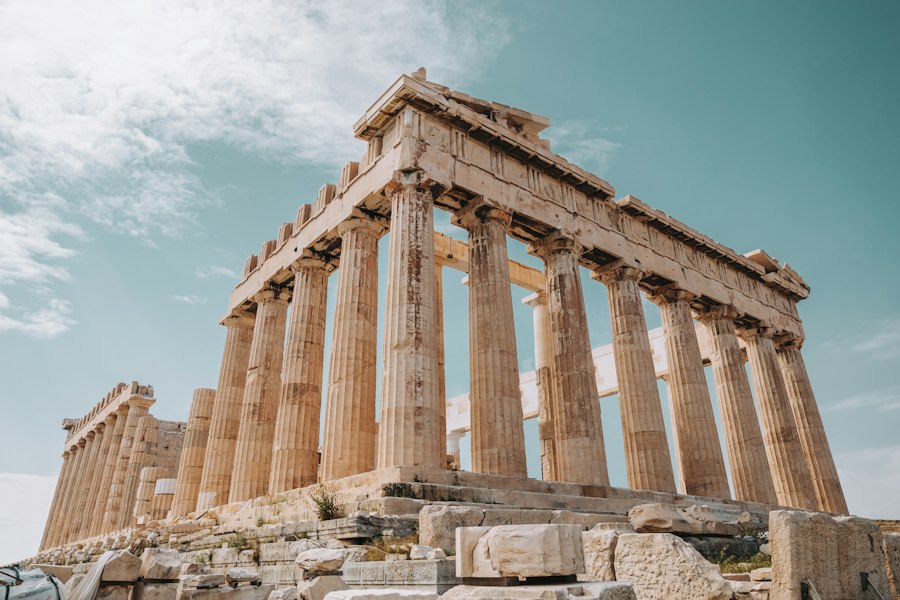
Overview
Greece launched its Digital Nomad Visa in 2021, making it one of the earliest EU countries to formally welcome remote workers. The draw is obvious: Mediterranean climate, extraordinary history, some of the world's most beautiful islands, and relatively low cost of living compared to Western Europe. Athens is a proper European capital that remains underpriced. Crete and the Cyclades offer island living that Instagram cannot exaggerate.
Greece also gives you Schengen access and, with time, a path to EU permanent residency, making it a serious long-term option for non-EU remote workers who want Southern European lifestyle at a more accessible price point than Portugal.
UTC+2/+3
Timezone (EET/EEST)
Requirements
💰
Income, €3,500/month
3,500 EUR/month gross. One of the higher thresholds but competitive with Portugal and Spain. Verified with 3 months of bank statements and employment contracts.
💼
Remote Work Proof
Employment contract with a non-Greek employer or client contracts with international clients. Standard documentation package, employer letter, recent payslips or invoices.
❤️
Health Insurance
Comprehensive coverage in Greece, including hospitalisation. Must be valid for the full duration of the visa. Private policies from international providers work, verify Greece is included.
🚒
Criminal Record
From your home country, apostilled. Greece is a Hague Convention signatory. Must be recent, typically within 3 months of application.
🏠
Accommodation
Proof of accommodation in Greece, rental contract or confirmed booking. A short-term rental agreement for the initial visa period is accepted.
📄
AFM (Tax Number)
You'll need a Greek tax number (AFM) once you arrive, obtainable at a local tax office (Eforia). Required for banking, contracts, and the tax incentive application.
Application Routes
Primary Route
Consulate Application (Before Arrival)
Apply at the nearest Greek consulate or embassy before travelling. Gets you a Type D long-stay visa valid for 1 year. Once in Greece, register with the local migration authority and obtain your residence permit. The consulate route is well-established and the primary path for most applicants.
Alternative
Apply Inside Greece
If you enter on a tourist Schengen visa, you can apply for the digital nomad residence permit from inside the country at the Migration Service (Ypiresia Metanasteysis). Requires careful timing within your 90-day Schengen window. A local immigration lawyer makes this significantly easier.
💡 Greek bureaucracy is real
Greece has a well-earned reputation for administrative complexity. Government offices have specific hours, documents need to be in Greek or officially translated, and appointment availability varies. Working with a local lawyer or immigration specialist in Athens is strongly recommended, it saves weeks.
Tax, The 50% Discount
⚡ Article 5C-50% Income Tax Exemption
Greece offers a significant tax incentive for new tax residents who transfer their tax residency to Greece: a 50% exemption on Greek taxable income for 7 years. This applies if you haven't been a Greek tax resident for the past 5 years and you work for a Greek employer or conduct business from Greece.
Standard Greek income tax rates without the incentive run 9% to 44%. With the 50% exemption, effective rates are roughly 4.5% to 22%, competitive with Portugal's NHR. Apply within 30 days of establishing tax residency.
You become a Greek tax resident after 183 days in the country. If you're mobile and spending significant time elsewhere, you may not trigger Greek tax residency, which means neither the tax incentive nor the tax burden applies.
Cities
⭐ Capital · EU infrastructure
Athens
€800-1,400/month 1BR
A real European capital with 3,000 years of history, and genuinely affordable by EU standards. Koukaki, Psyrri, and Exarcheia for the creative/nomad scene. Excellent fibre internet, Metro connectivity, and a growing startup ecosystem. Hot summers, mild winters.
Best flightsGrowing startup sceneMost affordable EU capital
⭐ Second city · Northern charm
Thessaloniki
€600-1,100/month 1BR
Greece's second city and genuinely underrated. More authentic than Athens, incredible food (the best food city in Greece by many accounts), Byzantine history, sea views, and a large university population that keeps it young and energetic. 20-30% cheaper than Athens.
Best food in GreeceCheaper than AthensYoung energy
Island · Full-year lifestyle
Crete, Heraklion / Chania
€700-1,200/month 1BR
Greece's largest island is large enough to have real city infrastructure, Heraklion has a proper airport with direct international flights, hospitals, and services. Chania in the west is more picturesque. Mild winters make year-round living genuinely viable. Strong fibre in the cities.
Year-round viableDirect flightsMediterranean coast
Island · Famous for good reason
Santorini / Mykonos
€900-1,800/month 1BR
The iconic islands. Stunning but with caveats for long-term living: very seasonal (quiet October through April), tourist-inflated prices, and limited infrastructure outside high season. Better for a 2-3 month stay than a full year. The views genuinely are as good as advertised.
SeasonalSpectacularShort stays better
Costs
| Item | Approx (EUR) | Notes |
|---|
| Visa application fee | ~€75 | Consulate fee |
| Residence permit registration | ~€150 | On arrival in Greece |
| Immigration lawyer | €500-1,200 | Strongly recommended for Greece's bureaucracy |
| Health insurance (annual) | €400-900 | Greece-valid comprehensive coverage |
| Criminal record + apostille | €50-150 | Varies by country |
| Total setup estimate | €1,175-2,475 | Including legal help |
Pros
- Schengen + EU access, travel anywhere freely
- 50% income tax exemption for 7 years
- Lower cost of living than most Western EU countries
- Mediterranean climate, some of the best weather in Europe
- Extraordinary history, culture, and food
- Island lifestyle with real infrastructure (Crete)
Cons
- Greek bureaucracy is genuinely slow and complex
- Income threshold €3,500/month, higher than Latin American options
- English less widely spoken outside tourism/business
- Island infrastructure very seasonal
- Banking can be difficult to set up without local help