Overview
Portugal launched the D8 Digital Nomad Visa in 2022, one of the first European countries to formally address remote workers. The appeal is straightforward: EU + Schengen access, an attractive flat tax regime (NHR), English spoken widely in cities, and an Atlantic lifestyle that suits people who want Europe without paying London or Amsterdam prices.
Lisbon is expensive now compared to five years ago, that's honest. The D8 visa attracted exactly the kind of remote workers who drove rents up. But Portugal outside Lisbon, Porto, Madeira, the Algarve, still offers strong value. And the NHR tax regime makes the financial case compelling for qualifying professionals.
5 years
To permanent residency
Requirements
💰
Income, €3,480/month
4× Portugal's minimum wage. Verified with 3 months of bank statements plus employment contracts or freelance invoices. One of the higher European thresholds but justified by EU access.
💼
Remote Work Proof
Employment with a non-Portuguese company, or freelance contracts with international clients. Employment letter, contracts, and recent invoices. Standard documentation.
❤️
Health Insurance
Coverage valid in Portugal. Once you're a registered resident you can access the NHS (SNS), but private coverage is required for the visa application. Sanitas and Médis are common options.
🚔
Criminal Record
From your home country, apostilled. Portugal is a Hague Convention signatory, apostille process is the same as for Spain. Must be recent (within 3 months of application).
🏠
Accommodation in Portugal
Rental contract or confirmed booking. A 3-month furnished rental at the application stage is accepted. You don't need a permanent address to apply.
🆔
NIF (Tax Number)
You'll need a Portuguese tax number (NIF), can be obtained remotely through a fiscal representative before arrival, or at a local tax office on arrival. Required for banking and contracts.
⚠️ AIMA appointment wait times
Portugal's immigration authority (AIMA, formerly SEF) has long appointment backlogs, sometimes 3-6 months. Apply online early and be patient. Working with an immigration lawyer significantly helps navigate the queue.
Application Routes
Option A
Consulate Route (From Abroad)
Apply at your nearest Portuguese consulate before arriving. Gets you a temporary stay visa valid for 4 months, during which you must register with AIMA for your residence permit. The most common starting route for those outside Portugal.
Option B, If Possible
Apply Inside Portugal
Enter on a Schengen tourist visa (90 days), find accommodation, get your NIF and bank account, then apply directly to AIMA for a residence authorisation. Longer stay granted, no consulate visit needed. Requires careful timing within the 90-day window.
💡 NHR application timing
Apply for NHR status within the first tax year of your Portuguese residency, ideally in the first few months. Miss this window and you lose the flat-rate option. Get a local accountant (contabilista) to file it, don't try to do this one yourself.
Tax, NHR Regime
Non-Habitual Resident (NHR), What It Actually Means
The NHR gives qualifying residents a flat 20% tax rate on Portuguese-source income for 10 years. For remote workers earning from foreign clients or employers, that foreign income is often exempt or taxed at reduced rates under double-taxation treaties. The combination of a low flat rate and foreign income exemption made Portugal uniquely attractive.
In 2024, Portugal reformed NHR into "IFICI" (or NHR 2.0). The flat rate remains but eligibility is now tied to specific qualifying activities, technology, scientific research, and certain high-value professions. Remote IT and networking professionals generally qualify, but confirm with a tax advisor before assuming.
Standard progressive tax otherwise: 14.5% to 48%. NHR makes a meaningful difference.
⚠️ US citizens, this gets complicated
The US taxes citizens on worldwide income regardless of where they live. The Portugal-US tax treaty helps but doesn't fully eliminate US obligations. If you're American, talk to an international tax specialist before moving anywhere abroad, not just Portugal.
Cities
Portugal has genuine variety, capital city infrastructure, university city energy, Atlantic islands, and sun-drenched south coast. Each option serves different working styles.
⭐ Capital · Most connected
Lisbon
€1,400-2,200/month 1BR
Best airport connections, strongest startup scene, most English spoken. Alfama for atmosphere, Mouraria and Arroios for value, Príncipe Real for cafés and coworking. More expensive than it used to be but still a strong choice for those who want full urban infrastructure.
Best flightsStartup sceneMost expensive
⭐ Second city · Best value
Porto
€950-1,500/month 1BR
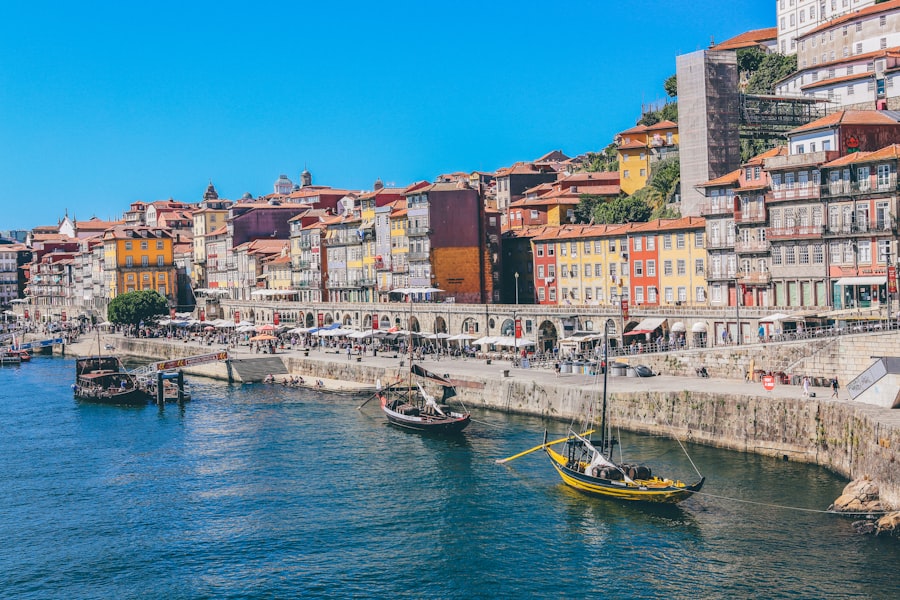
20-30% cheaper than Lisbon. University city energy, beautiful riverside architecture (Ribeira), great wine and food, growing tech scene. Bonfim and Cedofeita neighbourhoods are the nomad sweet spots. Underrated and honest.
Best valueUniversity energyRiver + wine
Island · Purpose-built nomad hub
Madeira (Funchal)
€800-1,300/month 1BR
The original European digital nomad programme, Digital Nomads Madeira launched here in 2021. Mild year-round climate (20-25°C), fast fibre, mountains meeting the Atlantic. The government literally built coworking spaces for nomads. Quieter lifestyle than mainland Portugal.
Year-round mildNomad programmeMountains + sea
South coast · Sun and surf
Algarve, Lagos / Tavira
€900-1,600/month 1BR
Southern Portugal's coastline, dramatic cliffs, beaches, surf. Large English-speaking expat and nomad community. Lagos is the hub (coworking, cafés), Tavira is quieter and more Portuguese. Less urban infrastructure but the lifestyle is excellent. Faro airport serves the whole region.
Beach lifestyleEnglish expatsSurf culture
Costs
| Item | Approx (EUR) | Notes |
|---|
| D8 visa application fee | ~€90 | Consulate fee |
| AIMA registration (on arrival) | ~€85 | Residence permit processing |
| NHR/IFICI application (accountant) | €200-500 | Worth every cent, do not skip |
| Health insurance (annual) | €500-1,000 | Private, Portugal-valid coverage |
| Criminal record + apostille | €50-150 | Varies by country |
| Immigration lawyer (optional) | €500-1,500 | Strongly recommended for AIMA queue navigation |
| Total setup estimate | €925-3,325 | First year, including legal help |
Pros
- EU + Schengen, travel anywhere in Europe freely
- NHR/IFICI flat 20% tax for up to 10 years
- English very widely spoken in cities
- Path to citizenship in 5 years
- Excellent safety and quality of life
- Madeira, purpose-built nomad infrastructure
Cons
- Lisbon rents surged 40-50% in 5 years
- AIMA appointments can take 3-6 months
- NHR 2.0 has stricter qualification criteria
- Income threshold (€3,480/mo) higher than Latin American options
- Portuguese bureaucracy is genuinely slow